
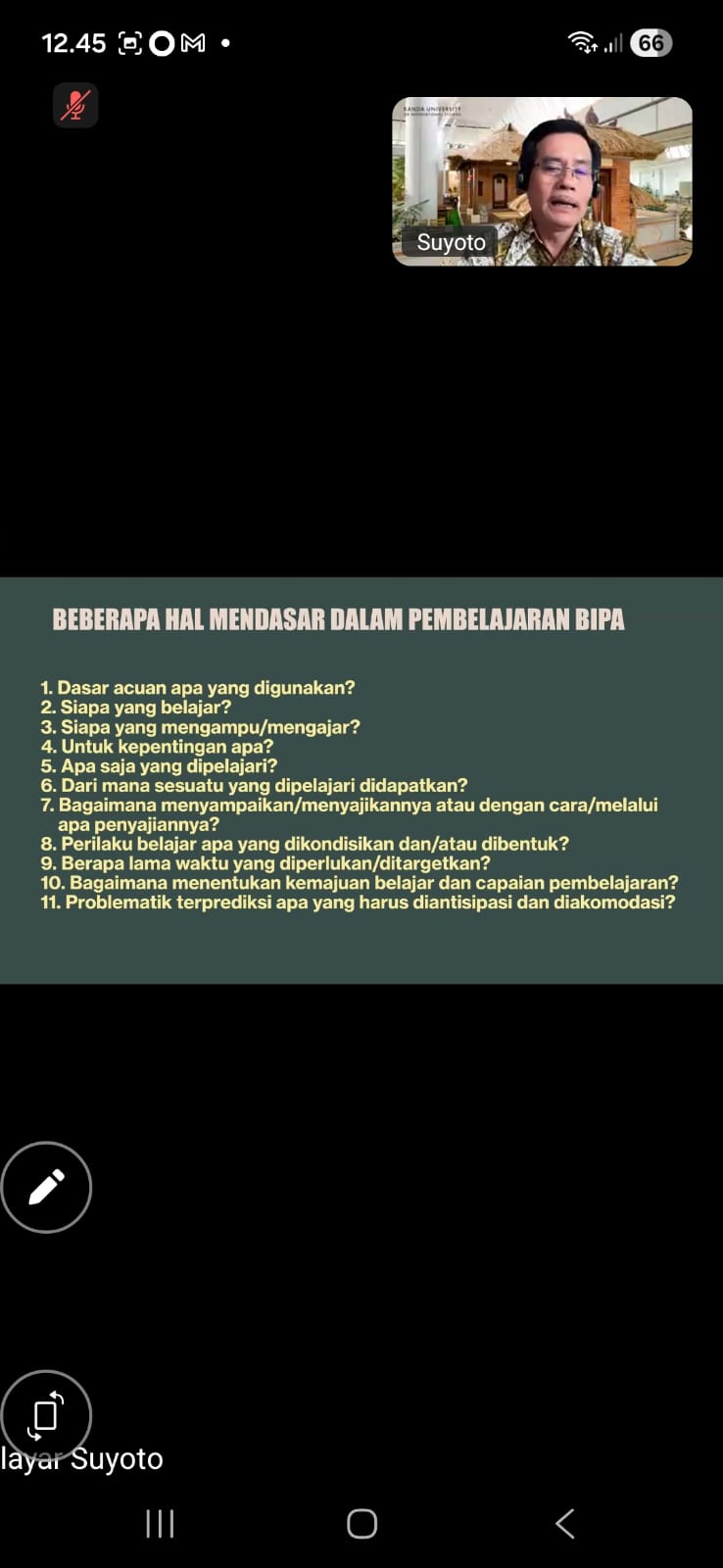
The teaching of Indonesian for Foreign Speakers (BIPA) is more than a simple process of language transfer. It is a systematic and procedural instructional framework specifically designed to achieve particular learning objectives. As an instructional system, BIPA consists of several interdependent components that are carefully managed through structured procedures and comprehensive planning, ranging from curriculum and syllabus development to the preparation of instructional designs by BIPA instructors.
Building a Strong Foundation for Effective BIPA Learning
To establish an effective learning ecosystem, BIPA instructors and program organizers must address several fundamental philosophical and practical questions. These include identifying who the learners are, who will facilitate the learning process, the objectives of the program based on learners’ needs, the learning materials to be used, and their respective sources. Additionally, procedural aspects such as the duration of instruction, teaching strategies, methods for assessing learning progress, and anticipating potential challenges must be incorporated from the early stages of planning.
The Role and Methodological Principles of BIPA Learning
In BIPA education, teaching methodology serves as a comprehensive framework for delivering instructional materials and organizing the learning process in a structured and procedural manner. The methodology represents the practical implementation of didactic and methodological principles based on specific pedagogical approaches.
Several key methodological principles must be considered in the implementation of BIPA instruction.
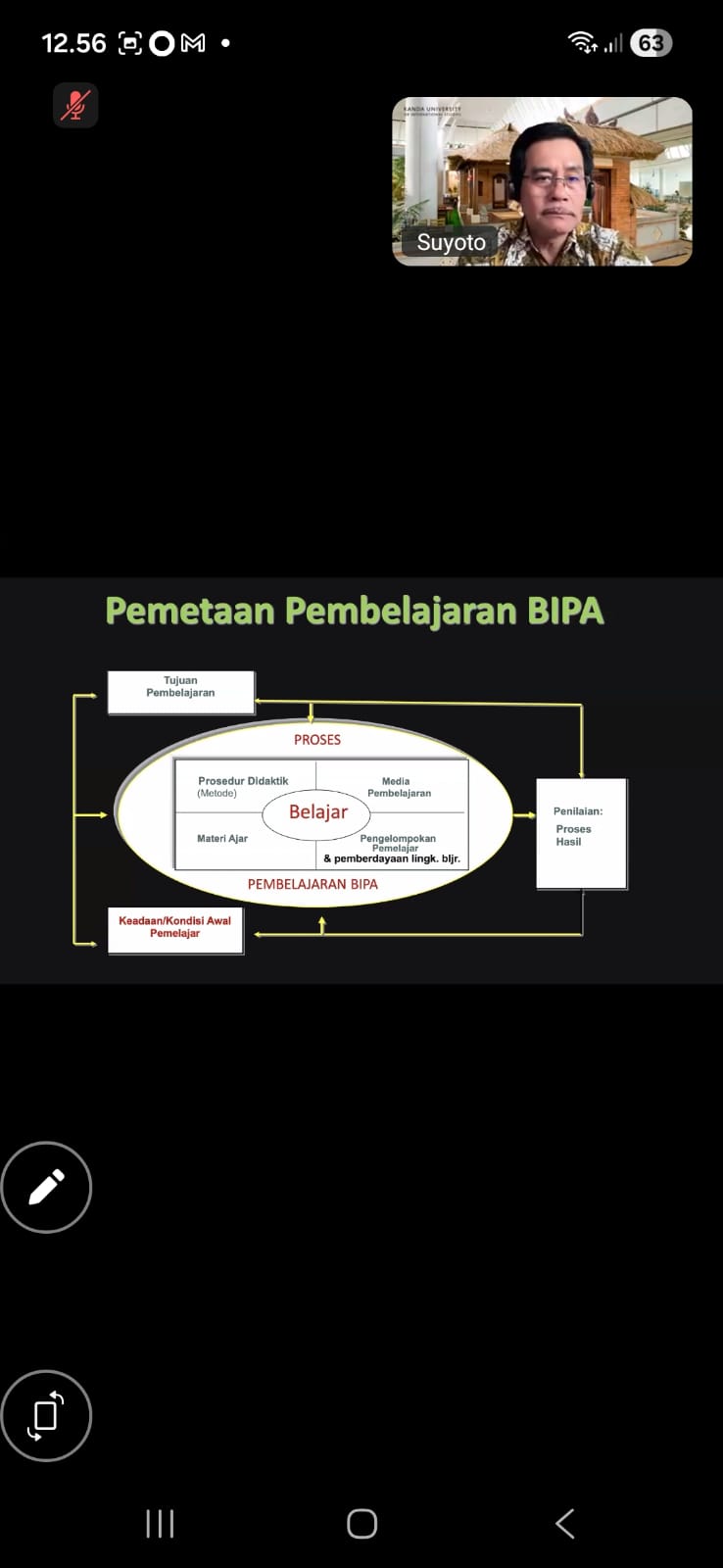
Positioning Learners as Active Participants
BIPA learners should be regarded not only as recipients of knowledge but also as active participants and outcomes of the learning process. Instructors are encouraged to recognize, develop, and empower learners’ individual potentials throughout their language-learning journey.
Integrating Sociocultural Contexts
Effective BIPA instruction requires learners to engage with authentic and empirical situations through practice, exposure, and experiential activities that incorporate Indonesian sociocultural aspects. This approach enables learners to understand not only the language but also the cultural contexts in which it is used.
Integrating Meaningful Learning Components
Learning materials, resources, media, and assessment methods should be aligned in an authentic, innovative, and functional manner. Such integration provides meaningful reinforcement and supports learners’ subsequent learning processes.
Selecting and Implementing Appropriate Teaching Methods
In practice, every teaching method has its own strengths and limitations. Therefore, the selection of instructional methods depends heavily on the policies of the program organizers, the orientation of the program, and the specific needs of the learners. Instructors may combine fundamental principles from various methodologies as long as they remain relevant and functional in achieving learning objectives.
Ultimately, effective BIPA methodology should lead learners to master two essential competencies: communicative competence, both oral and written, and linguistic competence, including grammatical accuracy. These outcomes can be achieved through the consistent application of training, direct practice, and a balanced integration of grammatical and communicative aspects within appropriate sociocultural contexts.