Semarang, 2025 – Students from the University of Diponegoro’s Thematic Community Service Program, Group 5 Team 120, with the theme “Improving Food Safety in the Surrounding Areas of the University of Diponegoro Campus,” successfully created a safe food environment in the Perumda Tembalang area. This program was accompanied by education and guidance focused on the 16 members of the P3T (Perumda Tembalang Vendors Association), who sell a variety of foods and beverages, such as siomay, cilok, cut fruit, green banana ice cream, meatballs, etc. This activity began on May 5 and ended on June 22, under the supervision of Dr. Ninik Rustanti, S.TP., M.Si and other lecturers from the Faculty of Nutrition Medicine Undip, as Field Supervisors (DPL).
The activity began with a visit to community leaders and local residents, followed by mapping and data collection on boarding houses in RW 05, which is known as a densely populated student area due to its proximity to Diponegoro University and serves as the most strategic place to live for students from various universities in Semarang, especially those from Undip and Polines. After mapping the area and collecting population data, the KKN Group 5 students conducted a survey and collected data on traders in the area, especially those who are registered as RW 05-affiliated traders known as the Paguyuban Pedagang Perumda Tembalang (P3T) “Sejahtera”.
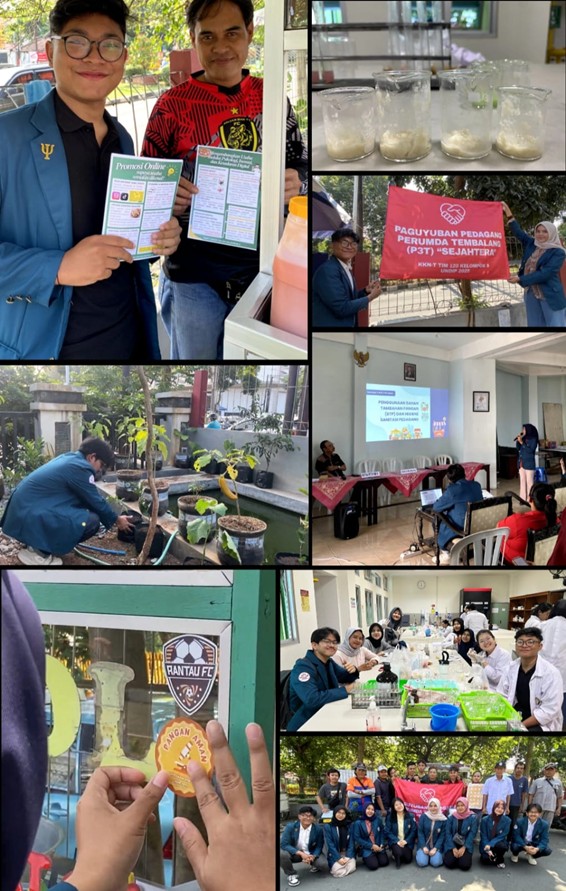
As an effort to improve food safety and as a tangible form of concern for snack foods around the campus, the students organized a Food Test program in collaboration with the Chemistry Laboratory of the Department of Nutrition, Faculty of Medicine, Undip. This laboratory test was conducted to detect the presence of hazardous food additives such as formalin, saccharin, rhodamine B, and methanyl yellow in food products sold by P3T vendors. The test results showed that all snacks tested were safe and fit for consumption. Based on these results, vendors who passed the lab tests were given a “Safe Food” sticker as a form of appreciation and assurance that their products are free from harmful substances and meet hygiene and sanitation standards.
Before conducting assessments and lab tests, education was first provided on the dangers of food additives (BTP) and how to create a clean environment to improve food safety. Other educational activities were also conducted, such as psychoeducation on mental preparedness in dealing with consumers and guidance on digital promotion strategies through Instagram @kknt120_panganaman. In addition, recommendations regarding daily sugar, salt, and fat consumption were conveyed in conjunction with the elderly health center program.
In addition to conducting education and mentoring, the KKN Group 5 students also regularly participated in community activities, one of which was becoming PJN (Mosquito Larva Monitors) officers, which was carried out every Friday. Health checks were also conducted together with health center officers, including weighing, checking blood pressure, blood sugar, uric acid, and cholesterol.
As a token of appreciation, the group gave souvenirs to the vendors, such as flags, recycled trash bins, and aprons to use while selling. This activity was warmly welcomed by the residents and administrators of RW 05. Mr. Samtoro, the secretary of RW 05, expressed his gratitude because now the community feels more at ease when buying snacks. A similar sentiment was expressed by the Head of Tembalang Village, Mrs. Asih, who considered this program to be very effective in raising awareness of healthy food while supporting MSMEs in facing the digital era. Then, as a form of concern for food security, the students initiated the “Urban Farming on the Move!” program by handing over 16 vegetable seeds to the residents of RW 05. This activity aims to provide a source of fresh food amid limited land availability, while encouraging a spirit of farming in the surrounding environment.
The entire series of KKN activities is expected to provide long-term benefits and inspire other regions in fostering a safe, healthy, and competitive environment. The leader of group 5, Karina from the Faculty of Nutrition Medicine at Undip, said, “The activities we do may seem simple. However, we believe that every small step we take can bring positive changes to RW 05. Especially in encouraging street vendors to be more concerned about consumer health, so that consumer trust in vendors can increase. Especially for the snack vendors around the Diponegoro University campus.”
This community service program received full support from Dr. Sukarjo Waluyo, M.Hum., Head of the Indonesian Literature Study Program at FIB Undip. He also hoped that this program would spark many other contributions from students in other Indonesian Literature Study Programs.
– @kknt120_5tembalang.